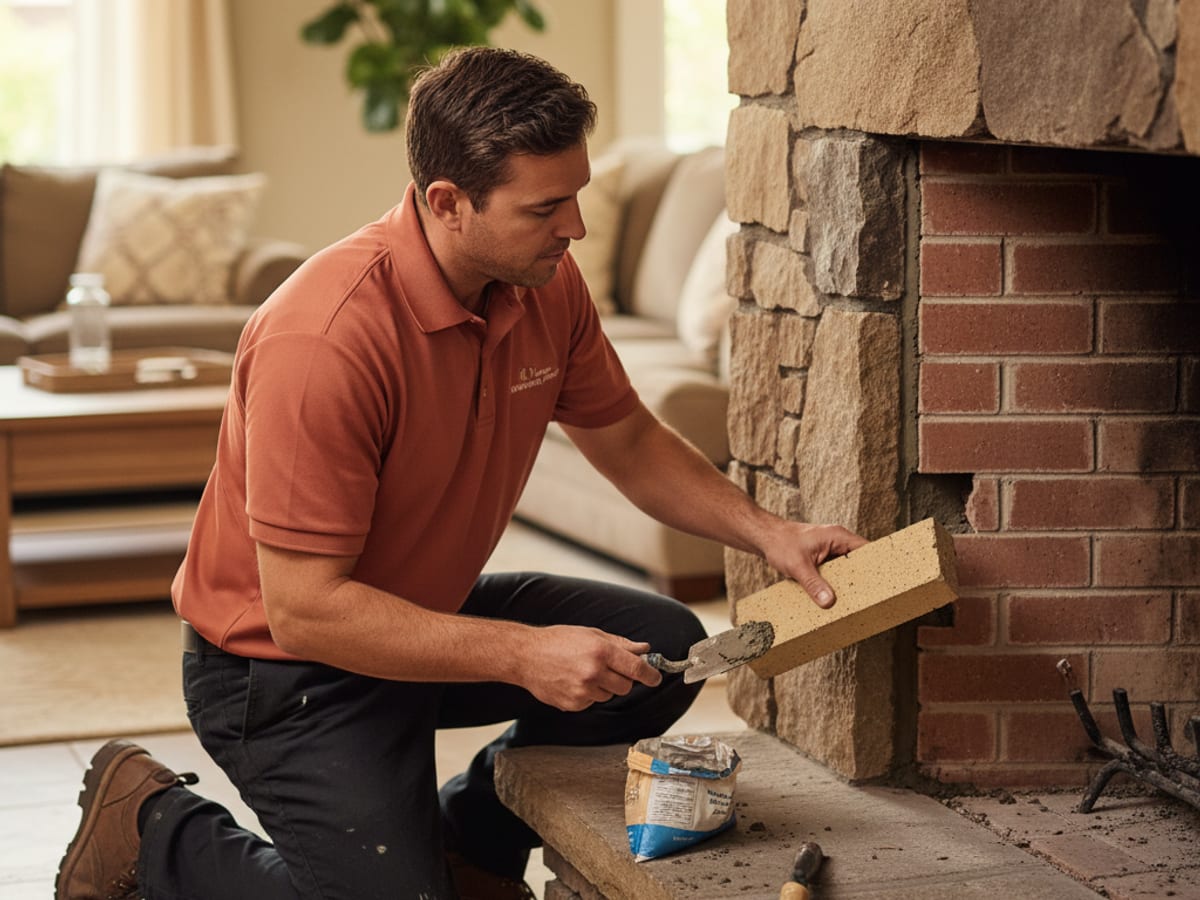
Most gas fireplace repairs in San Diego cost $150 to $650. The usual culprits are a dirty pilot, a failed thermocouple or thermopile, or a worn gas valve. A service call with diagnosis runs $100 to $200, often credited toward the fix. Here in San Diego, light use plus coastal moisture creates a specific failure pattern, and it’s not the one the national cost guides describe.
Why San Diego gas fireplaces fail differently
National repair guides assume a fireplace that runs hard all winter. San Diego doesn’t work that way. Most homes here burn a gas fireplace a handful of evenings a year, mostly January through March.
That low use is good and bad. Good, because the burner and logs barely wear. Bad, because the parts that fail aren’t worn out from heat. They corrode from sitting still in damp coastal air.
Coastal moisture is the real enemy. Salt-laden marine layer creeps inland from La Jolla to Encinitas to Chula Vista. It settles on the pilot assembly, the thermocouple tip, and the gas valve contacts. A fireplace that worked fine last March often won’t light this December, not because anything broke, but because nine months of marine air corroded the millivolt connections.
So the San Diego pattern looks like this. The unit sits idle from spring through fall. The first cold night arrives. You turn the key, and nothing. That’s a corrosion problem, not a wear problem, and it’s cheap to fix if you catch it early.
What gas fireplace repair costs in San Diego
These are real 2026 ranges for San Diego County, parts and labor combined. A standing-pilot unit is the most common type in homes built before 2010.
| Repair | What it does | Cost |
|---|---|---|
| Service call + diagnosis | Inspect, test, find the fault | $100–$200 |
| Pilot cleaning + adjustment | Clears soot and corrosion off the pilot | $150–$300 |
| Thermocouple replacement | Restores the safety shutoff sensor | $150–$300 |
| Thermopile replacement | Powers the valve in millivolt units | $200–$400 |
| Igniter (spark or hot-surface) | Restores the spark that lights the pilot | $150–$350 |
| Gas valve replacement | Replaces the main control valve | $350–$650 |
| Blower / fan motor | Restores heat circulation | $200–$500 |
| Glass panel replacement | Replaces cracked or fogged glass | $250–$600 |
| Remote / receiver module | Restores remote and wall-switch control | $150–$400 |
| Annual service + cleaning | Tune-up, full safety check | $150–$250 |
Two notes on these numbers. First, the diagnosis fee is usually credited toward the repair, so ask before you book. Second, the most common San Diego repair, by far, is a pilot cleaning or thermocouple swap. That’s the corrosion fix, and it’s the cheapest one on the list.
The most common gas fireplace problems
Pilot won’t light or won’t stay lit
This is the call we get most. Turn the knob to pilot, hold it, and the flame either won’t catch or dies the second you release.
If it won’t catch, the pilot orifice is usually clogged with soot, spider webs, or corrosion. San Diego’s idle months let dust and webs build up in the burner box. If it lights but dies on release, the thermocouple isn’t sensing the flame, almost always because the tip is corroded or sitting out of the flame path.
Both are inexpensive fixes. Resist the urge to keep clicking the igniter, since raw gas builds up in the firebox between tries.
Igniter clicks but no spark
The igniter sends a spark to light the pilot. When it clicks without sparking, the electrode is fouled, the gap is wrong, or the wire connection has corroded loose. Coastal homes see corroded connections more than inland homes. A cleaning or electrode swap fixes it.
Fireplace runs then shuts off
The flame lights, burns a few minutes, then quits. That’s usually a failing thermopile, the part that generates the small voltage holding the valve open. Thermopiles weaken with age and corrode faster in salt air. A millivolt meter test at the service call confirms it in two minutes.
Foggy or white-filmed glass
A cloudy film on the inside of the glass is normal condensation residue, worse in damp coastal climates. It cleans with the right fireplace glass cleaner. A crack or a permanent etched haze means the panel needs replacing, and gas fireplace glass is a sealed safety component, not standard window glass.
Soot or a smell
Gas burns clean, so heavy soot means the unit is running rich or the venting is restricted. Even light use leaves residue worth checking. A gas smell when the unit is off means a leak, so shut the gas off at the valve and call right away.
Don’t forget the vent
A gas fireplace still vents combustion gases, and that vent needs the same attention as a wood chimney. CSIA and the National Fire Protection Association both call for a yearly inspection of every chimney and vent, gas included, regardless of how little you burn.
Here’s the San Diego twist. Idle vents are an open invitation. Birds, squirrels, and webs build up in a flue that sits unused nine months a year. A blocked gas vent can push carbon monoxide back into the house. The fix is simple and we cover it in our chimney cap buying guide, but the inspection matters first.
There’s also the wildfire angle. Inland San Diego County sits in a Wildland-Urban Interface zone, and a gas fireplace vent termination near roofline can catch wind-driven embers during a Santa Ana event. A code-compliant cap with spark-arrester mesh handles both the animal problem and the ember problem.
One more coastal note. Our rare, heavy winter rains find every weak point in a vent termination. If you only see water near the fireplace during a big storm, that’s a flashing or termination-cap issue. We break down how to tell the difference in our guide on flashing leaks versus crown leaks.
When to call a pro versus DIY
A few things are safe for a homeowner. Cleaning foggy glass, replacing batteries in a remote receiver, and checking that the wall switch is on. That’s it.
Everything past that involves gas. Thermocouples, valves, pilots, and igniters carry a real risk of a gas leak or carbon monoxide exposure if done wrong. Manufacturer warranties also void fast when an unlicensed person opens the valve assembly. The math rarely favors DIY here, since the part is cheap but the diagnosis and safe install are where the value sits.
If you smell gas, shut off the gas at the valve, open a window, leave, and call from outside.
How Draft Pro handles gas fireplace service
We’re a San Diego County chimney and fireplace company, and gas units are a big share of what we service here. A few things set our approach apart.
We give an upfront quote before any work starts, so you approve the price before we open the unit. We know the coastal failure pattern, so we check corrosion points first instead of guessing. And we cover the whole county, from the coast inland to the backcountry, so we see how different microclimates wear these units.
We don’t make safety-certification claims about ourselves, and you shouldn’t take any company’s word on that. Ask for proof of credentials, ask whether the technician follows CSIA and NFPA standards, and ask whether the quote is itemized. Those three questions tell you most of what you need to know.
For a full repair-by-repair pricing breakdown across the whole chimney system, see our chimney repair cost guide for San Diego. For the gas fireplace itself, our fireplace repair service page covers what we check on every call.
Frequently asked questions
How much does gas fireplace repair cost in San Diego?
Most repairs run $150 to $650, plus a $100 to $200 service call that’s often credited toward the fix. Pilot and thermocouple repairs sit at the low end. A full gas valve replacement sits at the high end.
Why won’t my gas fireplace light after sitting all summer?
Almost always corrosion. San Diego’s marine layer settles on the pilot and thermocouple over the idle months. The fix is usually a cleaning or a thermocouple swap, both inexpensive.
Do I need to service a gas fireplace I barely use?
Yes. CSIA and NFPA recommend a yearly inspection of every vent, gas included. Low use actually raises the risk of animal nests and corrosion, not lowers it.
Is foggy fireplace glass dangerous?
A light film is normal condensation residue and cleans off. A crack or permanent etching means the glass needs replacing, since it’s a sealed safety panel, not regular glass.
Can I fix a gas fireplace myself?
Cleaning glass and swapping remote batteries, yes. Anything touching the gas line, valve, pilot, or igniter should go to a pro. The leak and carbon monoxide risk isn’t worth it.
Does a gas fireplace vent need a chimney cap?
Yes. An idle vent invites birds, debris, and wind-driven embers. A code-compliant cap with spark-arrester mesh keeps the vent clear and meets fire-zone requirements across inland San Diego County.
Bottom line
Gas fireplace repair in San Diego is usually cheaper than people expect, because the parts that fail here fail from coastal corrosion, not hard use. Catch a stubborn pilot or a fading thermopile early and you’re looking at a couple hundred dollars, not a valve replacement.
Get the vent inspected yearly even if you barely burn it. The animal and ember risk is real here.
Need a gas fireplace looked at? Call us at (858) 925-5546 for an upfront quote. The diagnosis is credited toward any repair that follows, and we cover all of San Diego County.