Replacing a chimney cap in San Diego runs $225 for a stainless single-flue cap installed, up to $750 or more for a full chase cover on a prefab metal chimney. That’s the honest number for most homes in the county in 2026.
If your current cap is rusted, cracked, or missing entirely, this is the single cheapest fix that prevents the most expensive damage.
TL;DR
Chimney cap replacement cost in San Diego: $225–$750+, depending on cap type.
- Single-flue stainless cap: $225 installed
- Multi-flue stainless cap: $450–$650 installed
- Prefab chase cover (stainless replacement): $750+ installed
- Custom copper cap: roughly 3x the stainless price
- Skipping the cap entirely costs far more in water damage, animal removal, and masonry repair
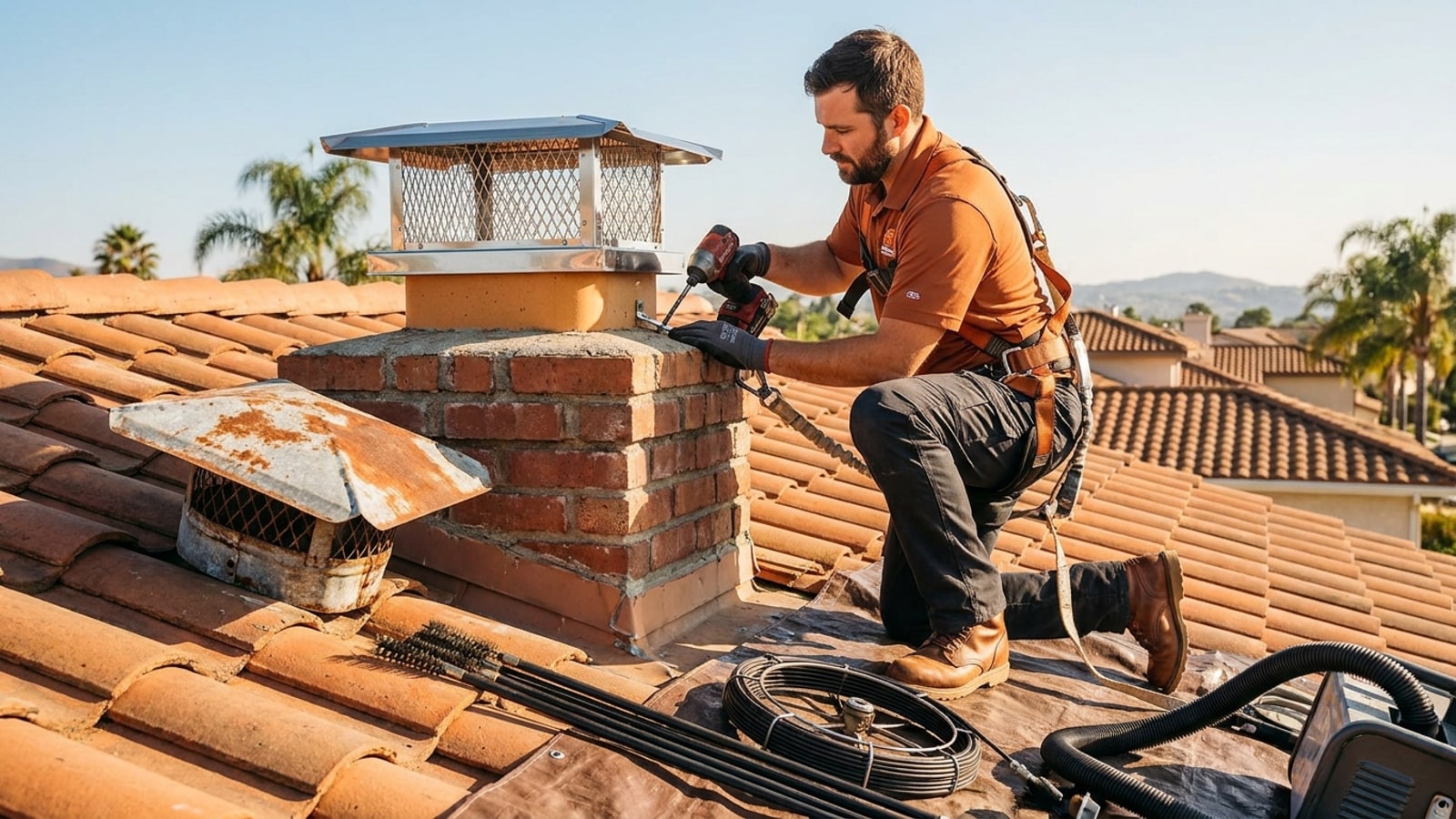
How much does chimney cap replacement cost in San Diego?
The chimney cap replacement cost depends on three things: how many flues you have, what material you choose, and whether your chimney is masonry or prefab.
Here’s what the sweeps in our San Diego network charge in 2026:
Single-flue stainless steel cap: $225 installed. This covers most San Diego homes with one masonry fireplace. 304 stainless, full perimeter spark-arrester mesh, lifetime rust warranty.
Multi-flue stainless cap: $450–$650 installed. One cap covering two or three flues sharing a crown. Common on older homes that vented both a fireplace and a furnace through the same chimney stack.
Full stainless chase cover: $750+ installed. Prefab chimneys use a chase cover instead of a poured crown. Custom-cut to your chase dimensions with proper slope so water sheds off cleanly.
Custom copper cap: roughly 3x stainless cost. Premium material with a 50-plus year service life and a distinctive patina. Used on historic restorations and high-end homes where the chimney is a visible feature.
Labor and roof-access factors affect every cap job. A steep tile roof or a two-story chimney adds time. If the sweep has to set a ladder through landscaping or walk a tricky pitch, expect the higher end of these ranges.
What does a chimney cap replacement actually include?
A proper cap installation is one visit: measure, install, verify mesh compliance, done. What you’re paying for breaks down roughly like this:
- Material: 40–50% of the cost
- Labor to access the roof and install: 40–50%
- Spark-arrester mesh inspection and confirmation: included
California Building Code requires spark arrester mesh (12-gauge minimum, 3/8 to 1/2-inch openings) on any chimney serving solid fuel in a Wildland-Urban Interface zone. Most of inland San Diego County qualifies. All caps installed through our network meet the code by default.
For a full breakdown of materials and sizing, see our chimney cap installation service page.
Why San Diego caps fail faster than the national average
The short answer is coastal salt air combined with UV exposure. San Diego chimneys spend their lives in conditions that accelerate corrosion.
Galvanized factory caps, the ones shipped on prefab fireplaces from the manufacturer, rust through in 8–10 years under normal conditions. Near the coast in cities like Encinitas, Carlsbad, or Del Mar, that timeline compresses to 5–7 years. Salt particles in the air deposit on metal surfaces and attack the zinc coating. Combined with year-round UV, the metal oxidizes faster than anywhere inland.
When the factory chase cover rusts through, the damage isn’t obvious from the ground. Water enters the chase housing around the prefab firebox insert, rusts the firebox, destroys the spark shield, and eventually wets the framing behind the wall. By the time the homeowner notices water stains inside, the chase cover has been failing for a season or two.
Galvanized single-flue caps on masonry chimneys follow the same pattern. They look intact until the mesh perforates and the lid warps, then rain enters freely. The sweeps in our network stop installing galvanized entirely because the labor cost to replace a cap is the same as a stainless install, and stainless lasts a lifetime.
304 stainless is the right default for most of San Diego County. Within a mile of the ocean, 316 stainless (marine-grade) is worth the small price premium.
What’s the cost of NOT replacing a chimney cap?
A missing or failed cap creates four problems, each with its own repair bill.
Water damage to the masonry. Rain enters the flue, soaks into the brick and mortar, and cycles through wet-and-dry expansion. Joints fail, bricks spall. Crown repair runs $400–$2,400 depending on severity. Tuckpointing adds $350–$1,800 more. A cap at $225 makes the math obvious.
Water damage to the crown. The crown slab is already the most vulnerable part of the chimney. Without a cap, every rainstorm sends water directly down onto the crown surface, accelerating cracking and deterioration. See the chimney crown repair page for what crown damage actually costs to fix.
Animal intrusion. Raccoons, squirrels, birds, and bats treat an uncapped flue as a ready-made den. Nests restrict airflow (smoke spills into the house), nesting material catches fire, and animal carcasses in the flue are a genuine health issue. Animal removal plus a new cap runs $400–$700 once you factor in extraction and sanitizing.
Downdraft and smoke spillage. A missing or damaged cap lets wind push air down the flue instead of up. The first sign is smoke rolling back into the living room when you open the damper. Solving a downdraft issue is harder than preventing it.
For a full picture of how water damage compounds across repairs, the chimney repair cost post covers every repair type with 2026 pricing.
How do you know your cap needs replacing?
Most homeowners spot the problem one of two ways: they see rust streaks on the chimney chase or brick face from the ground, or a sweep calls it out during an inspection.
Signs worth checking yourself:
Rust staining on the chimney exterior. Orange streaks running down from the cap joint are a clear indicator the cap or chase cover is oxidizing through.
Visible gaps in the mesh. Stand at ground level with binoculars. Perforated or missing mesh sections let embers escape (a code violation in WUI zones) and let animals in.
Cap rocking or lifting. A cap that’s no longer seated properly fills with wind-blown debris and lets rain bypass the lid.
Water stains on the firebox interior. Rust at the firebox floor or water pooling in the firebox after rain means the cap isn’t doing its job.
If you’re unsure, a Level 2 inspection ($249 with written report) includes a roof assessment and cap evaluation.
What’s the cost to replace a chimney cap vs. repair it?
Caps aren’t really repaired, they’re replaced. The component cost is low relative to labor, so patching a failed galvanized cap doesn’t make economic sense when a new stainless cap installed runs $225 and lasts 30 years or more.
The exception is a custom copper cap or a large custom-fabricated chase cover where the material cost is significant. If the structure of the cap is intact but a hinge or mesh panel has failed, a repair may be worth doing. The sweeps in our network will tell you honestly which situation you’re in.
What about wind-baffle caps?
If you have a downdraft problem and need a cap anyway, a wind-baffle (windcap) design addresses both at once. These caps use wind passing across the cap to create suction that pulls air up the flue instead of pushing it down.
Wind-baffle caps run about $120–$180 more than a standard cap of the same type. They don’t fix every downdraft cause, short flues relative to nearby trees or negative house pressure need other solutions, but they solve the most common cases.
For full material and design guidance, the chimney cap buying guide covers stainless vs. galvanized vs. copper and wind-baffle options in detail.
Frequently asked questions
How long does a chimney cap replacement take? Most cap installs are a single visit, one to two hours including roof access and confirmation the cap is seated and mesh-compliant. If the old cap requires a chase cover replacement with custom fabrication, the sweep may measure first and return with the fabricated piece within a few days.
Does the cost to replace a chimney cap include removing the old one? Yes, in every quote we’ve seen. The old cap comes off as part of the install. If it’s a rusted-through chase cover bolted to a prefab chase, removal takes a bit longer but is still included.
Can I replace a chimney cap myself? The cap itself is sold at home centers. But the labor involves roof access with a ladder, working near a chimney edge, and confirming spark-arrester mesh compliance for California code. Most homeowners decide the $225 installed price is worth having a sweep handle the roof work, and you get the code documentation. If you’re comfortable on a roof and know your flue dimensions, it’s a straightforward DIY job.
Will my homeowner’s insurance cover chimney cap replacement? Standard homeowner’s policies cover sudden accidental damage, a cap knocked off by a tree branch, for example. Deterioration from age and corrosion is typically excluded as a maintenance issue. Check your policy. Some carriers require documented cap and spark-arrester compliance as a condition of coverage on wood-burning appliances.
Ready to replace a rusted or missing cap before the next rain? Call us at (858) 925-5546 for a same-day estimate.