Pellet stove cleaning should happen on two schedules: weekly homeowner tasks to keep combustion clean, and an annual professional service to clear the parts you can’t safely reach yourself. Skip either one long enough and you’re looking at poor performance, increased CO risk, or a fire in the exhaust system.
Here’s what you actually need to know.
TL;DR
- Clean the burn pot and ash trap weekly during the heating season.
- Vacuum the heat exchanger and exhaust pathway every month of regular use.
- Book a professional pellet stove cleaning once a year (or every 1–2 tons of pellets burned).
- Pellets produce fine fly ash that clogs exhaust blowers, heat exchangers, and auger chutes faster than wood ash does.
- Signs it’s overdue: erratic flame, excess smoke from the vent, error codes, or longer ignition times.
- Typical pro service in San Diego runs $150–$250.
How often should I clean my pellet stove?
Manufacturers (Harman, Quadra-Fire, Englander, others) align on a tiered schedule: weekly spot cleaning during active use, monthly deeper vacuuming, and a full annual service. NFPA 211 applies to all solid-fuel venting systems, pellet stoves included, and calls for annual inspection of the entire venting pathway.
In practice:
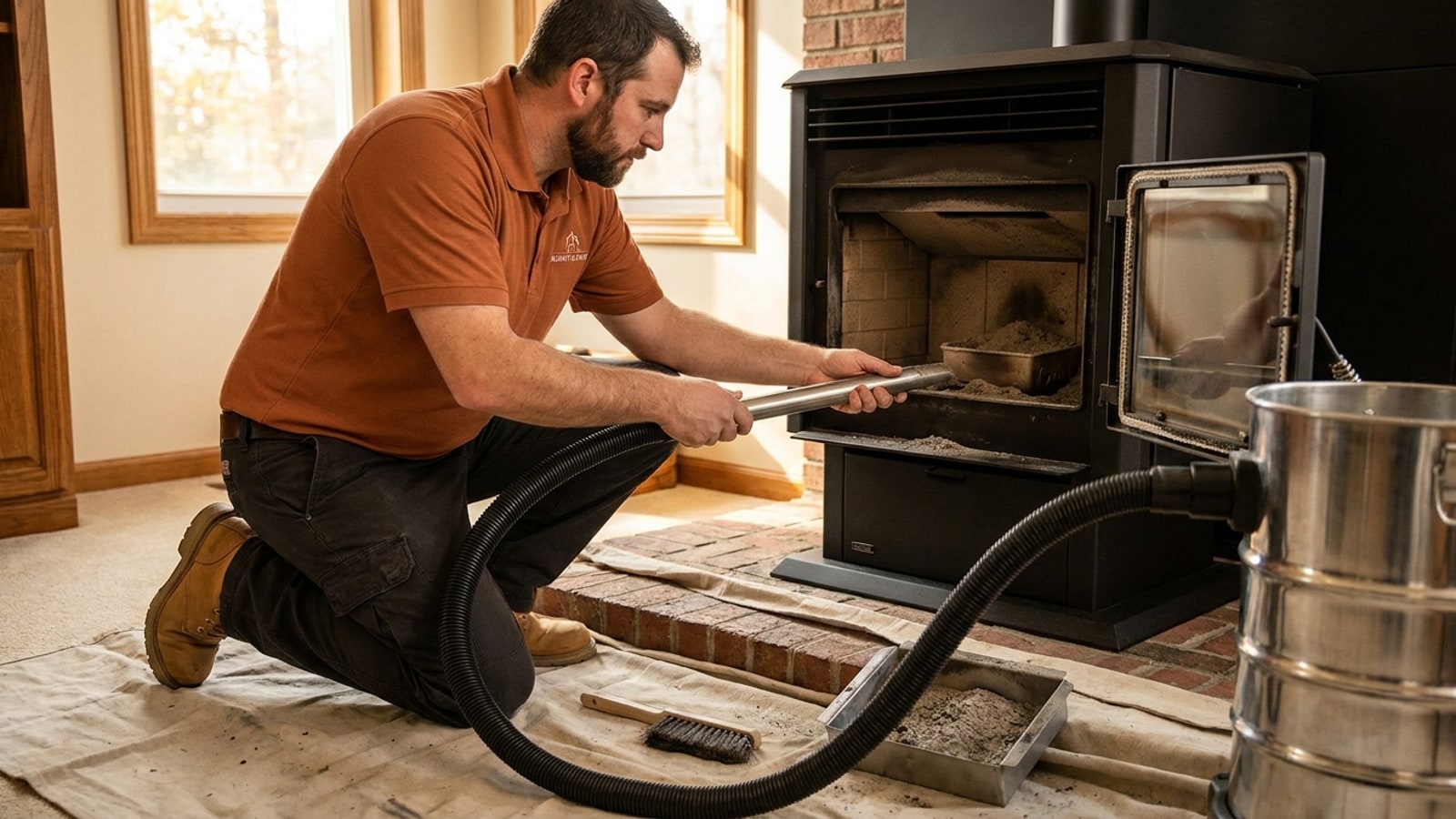
Weekly (homeowner): Empty the burn pot, clear the ash trap, and wipe the glass. This takes about 10 minutes and prevents clinker buildup that causes ignition failures.
Monthly (homeowner): Vacuum the firebox floor and the heat exchanger tubes with a shop vac or pellet-stove ash vacuum. Check the exhaust blower fan blades for ash caking.
Annually (professional): Full disassembly of the burn system, auger inspection, heat exchanger cleaning, exhaust blower removal and cleaning, venting clearance check, gasket and seals inspection, combustion air adjustment.
If you’re burning more than a ton of pellets a season (common in Ramona or Valley Center, where winter nights push into the 30s), some manufacturers recommend service at the 1-ton mark rather than waiting for calendar year.
Why pellet stoves clog differently than wood stoves
Wood fires produce larger chunks of ash that mostly fall into the ash pan. Pellet combustion is different: pellets are compressed wood fiber with a lot of surface area, and they burn at very consistent temperatures that generate fine fly ash. That ash is light enough to travel through the entire heat pathway before settling.
The problem spots that don’t exist on a traditional wood stove:
Burn pot. Clinker (fused, glassy ash residue) forms in the burn pot holes, restricting airflow to the fire. A partially blocked burn pot means incomplete combustion, more CO, and a weaker flame that the stove’s sensors may interpret as a fault.
Auger and auger chute. The auger feeds pellets from the hopper into the burn pot. Fine ash and moisture (pellets absorb humidity) can jam the auger or pack the chute, causing feed interruptions and error codes.
Exhaust blower. The blower pulls combustion gases through the heat exchanger and out the vent. Fly ash coats the blower wheel blades over time, reducing airflow. A slowed blower means the stove runs hotter than designed, which shortens component life.
Heat exchanger tubes. These tubes run between the firebox and the room air fan. Ash insulates them, cutting the heat transfer to your living space. A heavily fouled heat exchanger can reduce stove output by 20–30% before you notice anything obvious.
Venting and exhaust pipe. Pellet stove vents run at lower temperatures than wood-stove flues, which means ash and moisture can condense and cake inside the pipe, especially on horizontal vent runs. A blocked exhaust creates back-pressure that interferes with combustion and can force CO into the living space.
What are the risks of skipping pellet stove cleaning?
Two real risks: fire and carbon monoxide.
Fire. Ash-packed exhaust systems can ignite if the stove runs hot enough during an extended burn. This isn’t creosote fire (pellets don’t produce creosote in meaningful quantities), but accumulated ash and debris in the vent can smolder and spread to surrounding materials.
Carbon monoxide. Incomplete combustion from a dirty burn pot, restricted auger feed, or fouled blower produces elevated CO. Pellet stoves are sealed systems, so CO normally vents outdoors, but a blocked or leaking exhaust pathway can push it back into the room. The annual chimney inspection we recommend for wood-burning systems applies here too: the exhaust pathway and seals need to be checked every year.
If your CO detector has ever triggered with the pellet stove running, that’s not a nuisance alarm. Stop using the stove and call before the next burn.
Signs your pellet stove is overdue for cleaning
You don’t always get a warning code. Watch for:
- Flame that burns low, orange, or erratic instead of a bright, steady burn
- Stove taking longer than usual to ignite
- Pellets piling up in the burn pot unburned before catching
- Smoke or a burning smell near the exhaust vent exterior
- Glass fogging up within minutes of lighting (a clean stove keeps glass clear)
- Ash spilling out of the firebox during operation
- Error codes on the control panel related to ignition, pressure, or feed
- Louder than usual blower noise (a fouled blower wheel is out of balance)
Any of these during the heating season is a reason to pause operation and get the stove serviced before continuing.
What does a professional pellet stove cleaning include?
A professional cleaning by a wood stove service technician covers the parts homeowner vacuuming doesn’t reach:
Burn system disassembly. The burn pot is removed and cleaned of clinker. The auger chute is cleared and inspected for wear. Feed tube brushed clean.
Heat exchanger cleaning. Technicians use brushes and a commercial vacuum to clear fly ash from the exchanger tubes. This is the single biggest efficiency recovery from a professional service.
Exhaust blower removal. The blower is pulled out, the fan blades cleaned individually, and the blower housing vacuumed. On many stoves, this requires partial disassembly of the firebox surround.
Venting inspection and cleaning. The exhaust vent pipe is brushed from the stove back through the wall termination. Joints and seals are checked for leaks. The vent cap screen is cleared of fly ash and debris.
Gasket and door seal inspection. Air leaks at door gaskets let uncontrolled air into the firebox, which disrupts combustion and can cause over-firing. Worn gaskets are identified for replacement.
Combustion air calibration check. Some techs verify that the air-to-fuel ratio is within manufacturer spec, particularly important after a thorough cleaning when the airflow dynamics change.
Control board and sensor check. Pressure switches, thermistors, and the vacuum switch are tested. These sensors fail gradually, often showing up as intermittent error codes.
For context, a professional chimney sweep who’s certified to service pellet venting systems is the right call here. Not every chimney sweep works on pellet stoves (they’re more mechanical than a wood-burning system), so confirm before booking.
What does professional pellet stove cleaning cost in San Diego?
Standard professional pellet stove cleaning in San Diego typically runs $150–$250 for the full service described above. Complexity factors that push the price higher:
- Stove brands with difficult access panels (some require more disassembly time)
- Horizontal vent runs longer than 10 feet
- Vent termination on a roof vs. through-wall (roof work adds cost)
- Stoves that haven’t been serviced in more than two years (heavier ash accumulation)
- Parts replacement needed (gaskets, blower, burn pot) is priced separately
The $150–$250 range assumes a stove that’s been on a regular annual maintenance schedule. Neglected stoves can run higher.
For comparison, the annual maintenance schedule across all your solid-fuel appliances is worth thinking about together: scheduling a pellet stove service and a chimney inspection in the same appointment, if you have both a pellet stove and a wood-burning fireplace, can reduce the total cost.
Should I do it myself or hire a pro?
The weekly and monthly tasks are genuinely DIY-friendly. You need an ash vacuum (standard shop vacs can’t handle fine fly ash without clogging their filters), a soft brush, and about 20 minutes. Manufacturer manuals walk through exactly what to access and how.
The annual service is different. Removing and cleaning the exhaust blower, brushing the vent system, and checking combustion air calibration require tools, experience, and familiarity with how the manufacturer designed that specific stove. A DIY attempt that leaves the blower fouled or the vent improperly resealed creates the same CO and fire risks the cleaning was meant to prevent.
Our recommendation: do the weekly and monthly tasks yourself, on schedule. Book a pro once a year.
Frequently asked questions
Do pellet stoves need chimney sweeping like wood stoves? Not exactly. Pellet stoves don’t produce creosote (the combustible buildup that wood stoves accumulate), so the risk profile is different. But the exhaust vent and venting system still accumulate fly ash that needs to be cleared annually. Think of it as vent system cleaning rather than traditional chimney sweeping, but the goal is the same: keep the exhaust pathway clear and the combustion system safe.
Can I use a regular vacuum cleaner to clean my pellet stove? No. Fine fly ash from pellet combustion will clog and destroy a standard vacuum’s filter and motor. Use an ash vacuum rated for fine ash, or a shop vac with a HEPA filter. Even then, the heat exchanger and blower work is best left to a technician with the right equipment.
How do I know if my pellet stove’s exhaust is blocked? The clearest sign is smoke or soot staining around the vent termination on the exterior of your home. Inside, you may notice the stove repeatedly throwing pressure or vacuum fault codes, or the flame burning noticeably weaker than it did when the stove was new. A pressure test during the annual service will confirm vent restriction.
Is pellet stove cleaning included in a standard chimney sweep appointment? It depends on the company. Pellet stove service requires different tools and training than a wood-burning chimney sweep. Ask specifically when booking: “Do you service pellet stoves, including blower and heat exchanger cleaning?” Techs in the Draft Pro San Diego network who take pellet stove calls confirm this upfront.
Ready to get your pellet stove serviced before next season? Call us at (858) 925-5546 for a same-day estimate.