Common questions. Straight answers.
Most of what homeowners ask before they hire us. Don't see your question? Call us at the number in the header.
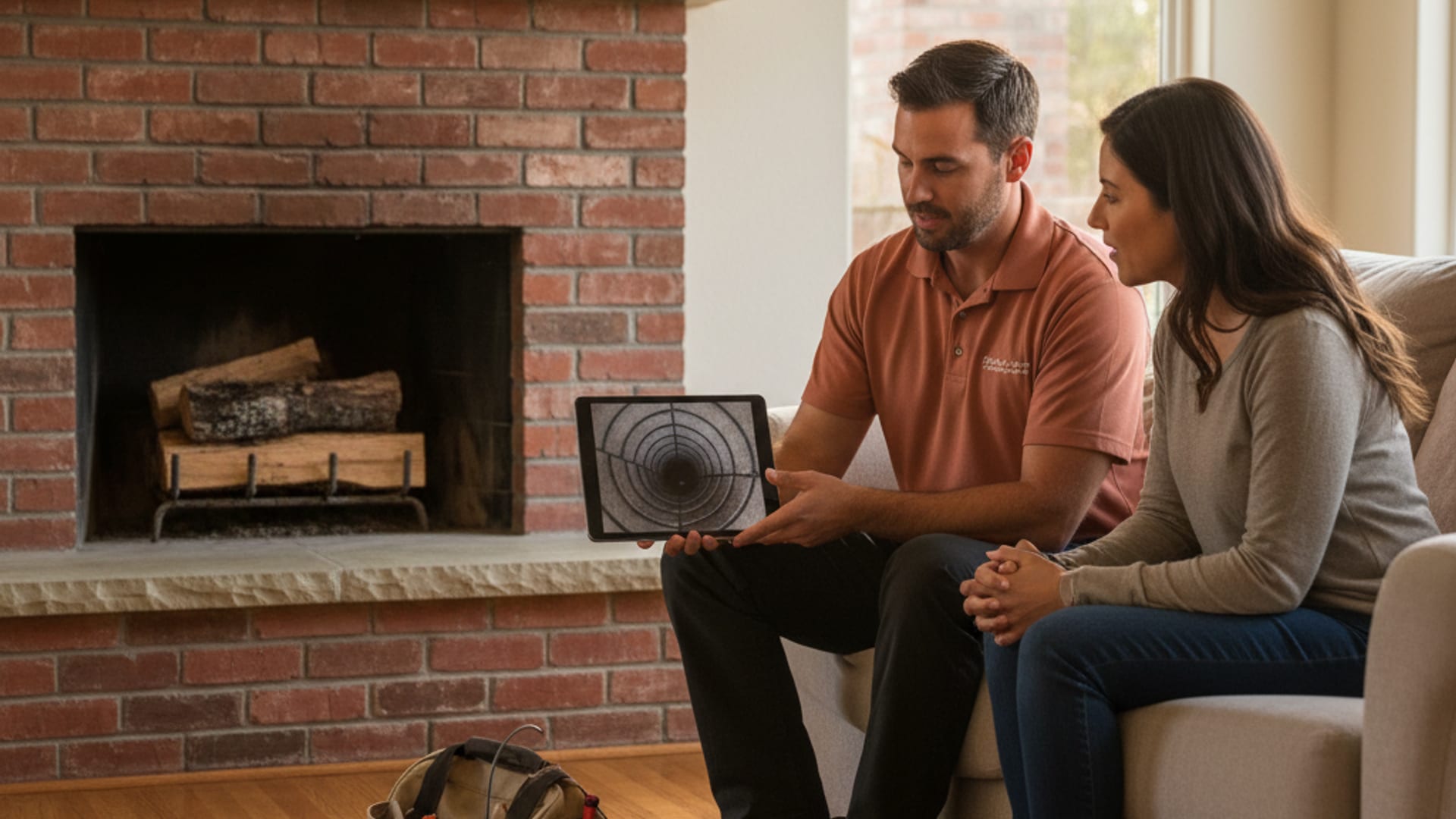
Sweep & inspection, pricing and what to expect
How much does a chimney sweep cost in San Diego?
A standard sweep with a CSIA Level 1 inspection is $189 for a single open masonry fireplace. Stage 2 creosote removal adds $200–$400. Stage 3 glazed buildup starts at $750 and may need a second visit. Inspections by themselves start at $89, and the inspection fee is credited toward any cleaning that follows.
How often should my chimney be swept?
CSIA recommends an annual inspection for any chimney that vents a fireplace or stove. Cleaning depends on use: most San Diego homes burning 1–2 cords a year need a full sweep every 1–2 seasons. Heavy users, anyone burning soft, wet, or green wood, and any wood stove insert should get an annual sweep.
Will it make a mess in my house?
No. We seal the firebox opening with plastic and run a HEPA vacuum at the firebox during the entire sweep. We bring our own drop cloths and wear shoe covers. Most clients tell us afterwards they could not tell we were in the room.
Do you sweep prefab and gas fireplaces?
Yes. Prefab (zero-clearance) fireboxes still need annual inspection and cleaning of the firebox, smoke chamber, and flue. Gas fireplaces get a different inspection focused on the burner, logs, valves, and venting, billed as a separate service.
Inspections, Level 1, 2, and 3
What is a CSIA Level 2 inspection?
A Level 2 inspection is the standard for real-estate transactions and any chimney that may have been damaged. It includes Level 1 plus a full color video camera scan of the entire flue top to bottom, an attic and basement check, and a written report with photos. Most lenders and home inspectors require it before closing.
When do I need a Level 2 versus a Level 1?
Level 1 = annual maintenance check, accessible portions only. Level 2 = pre-purchase, post-fire, post-earthquake, after a lightning strike, or any time you change fuels (wood to gas, gas to wood). Level 3 = partial removal of structure where hidden damage is suspected, only after a Level 2 finds reason.
Will I get a written report?
Yes. Every inspection includes a written report with photos, defects categorized by safety / structural / cosmetic, and a clear repair-or-pass recommendation. Level 2 reports are formatted for lenders, insurers, and real-estate disclosure. We email them within 24 hours of the inspection.
My insurer is asking for an inspection. Can you help?
Yes. Many California carriers now require a recent CSIA Level 2 inspection on file for homes with wood-burning fireplaces, especially in fire severity zones. Our reports document spark arrester compliance, clearances, and creosote levels per insurer requirements.
Repair, masonry, crown, cap, liner, flashing
How much does chimney repair cost?
Wide range. Spot tuckpointing of a few joints runs $350–$650. Crown rebuild with a poured cap is $1,200–$2,400. A stainless reline of a 25-foot flue is $2,800–$4,500. Cap installation starts at $225. Full chimney rebuild from the roof line up runs $4,800–$7,500. Every quote is flat-rate, in writing, after the camera inspection.
What is tuckpointing and do I need it?
Tuckpointing (or repointing) is the repair of failed mortar joints between bricks. Mortar fails before brick by design, it is the sacrificial layer. When you can scratch the joint with a screwdriver, water gets behind the brick, freezes, and pops the face off. Most San Diego coastal chimneys need tuckpointing every 20–30 years.
How do I know if my chimney needs a new crown?
Crown coat sealing works on crowns with hairline cracks and intact structure. Full rebuild is needed when cracks are wider than a credit card, the crown is missing chunks, or it was poured wrong from the start with no overhang. We send photos from the roof during the inspection so you can see exactly what is going on.
My chimney leaks. Is it the crown or the flashing?
Most chimney leaks come from one of four places: crown, cap, flashing, or porous brick face. We do a leak diagnosis first, usually a hose test running water on each suspect area in turn while watching the interior. Fixing the wrong one wastes money. The diagnosis is included in the inspection fee.
Are you licensed for masonry work?
Yes. The masonry pros we match hold the required California C-29 license. They pull permits where required by the AHJ, follow CSIA and NFPA 211 standards, and provide written warranties on all structural and waterproofing work.
Creosote, fire safety, and code
How dangerous is creosote really?
Stage 3 glazed creosote is the cause of most chimney fires. It is concentrated, flammable carbon, when it ignites, the flue can hit 2,000°F in seconds, crack the tiles, and ignite the framing around the chimney. The CSIA estimates 25,000+ chimney fires per year in the US, most caused by creosote that was never removed.
Can I burn creosote sweeping logs instead of getting service?
CSL (Creosote Sweeping Logs) work on Stage 1 and light Stage 2 by changing the chemistry of the deposit so it brushes out easier. They do nothing on glazed Stage 3. Worse, some homeowners use them instead of an inspection and miss cracked liners hidden by the buildup. They are a supplement, not a substitute.
Do I need a spark arrester cap in San Diego?
Yes if you are in a Wildland-Urban Interface zone, and most of inland San Diego County qualifies. California Building Code requires 12-gauge or heavier mesh with openings between 3/8" and 1/2". CalFire enforces this. All our caps meet the code by default.
Scheduling, service area, and dryer vents
How fast can you schedule service?
Most appointments are within the same week. Real-estate Level 2 inspections during escrow get prioritized, typically 24–48 hour turnaround. Emergency repair (active leak, animal in the flue, post-fire inspection) gets same-day response when possible.
Do you serve my city?
We cover every city in San Diego County, coastal Coronado to backcountry Julian, Oceanside to Chula Vista. Same flat-rate pricing across the whole county. No mileage upcharges.
Why does a chimney sweep do dryer vent cleaning?
Same skill set, confined space cleaning with brush and vacuum, combustion safety, and fire prevention. Dryer vent fires and chimney fires are the two leading causes of vented fires in residential homes. Most CSIA-certified sweeps offer both, and the same trip can handle both jobs.
How much does dryer vent cleaning cost?
Standard wall-vented run is $149. Roof-vented dryers are $249 because we work from the roof. The pros we send replace failed flexible foil vent with code-compliant rigid metal during the cleaning at no extra labor charge.
Ready for chimney service that actually answers the phone?
Call for a free quote. Same-day service on most repairs. Next-day install on most replacements.