Creosote removal. The thing that causes chimney fires.
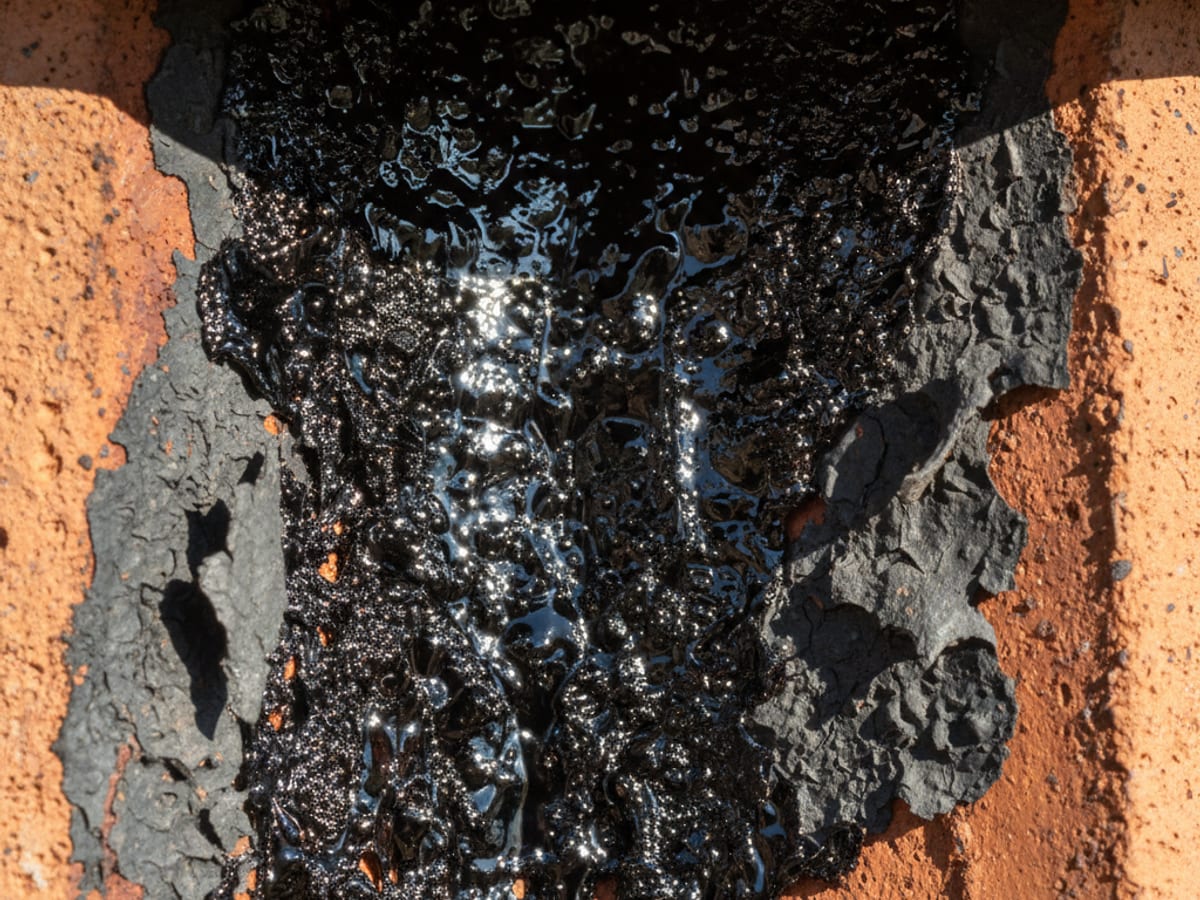
Creosote is the tar-like residue from incomplete wood combustion. Stage 1 looks like soot and brushes off. Stage 2 looks like crusty flakes. Stage 3 is a glassy black glaze fused to the flue tile, and it is what burns down houses. We remove all three with the right tools: brushes for Stage 1, rotary chains for Stage 2, and PCR chemical treatment plus rotary for Stage 3.
What's included in this service?
- Stage identification with camera scan before quoting
- Stage 1 sooty creosote removal with poly brush
- Stage 2 crusty creosote removal with rotary nylon chain
- Stage 3 glazed creosote removal with rotary carbide chain
- PCR (Poultice Creosote Remover) chemical treatment for heavy Stage 3
- Cre-Away or Anti-Creo-Soot powder treatment as a follow-up
- Post-removal camera scan to verify the flue is clear
When do you need this service?
- You burned green, soft, or wet wood last season
- You have a wood stove insert and never opened the bypass damper
- A camera scan or sweep showed glazed black buildup on the flue tile
- You have not had the chimney swept in 3+ seasons
- You experienced a chimney fire (audible roaring, sparks from cap)
- Your stove draft has dropped noticeably even with a clean firebox
What do homeowners ask about Creosote Removal?
How dangerous is creosote really?
Stage 3 creosote is the cause of most chimney fires. It is concentrated, flammable carbon, when it ignites, the flue can hit 2,000°F in seconds, crack the tiles, and ignite the framing around the chimney. The CSIA estimates 25,000+ chimney fires per year in the US, most caused by creosote buildup that was not removed.
Can a regular sweep remove glazed creosote?
No. Brushes will polish glazed creosote but cannot remove it. You need rotary chains driven by a drill, and for the worst cases, PCR chemical treatment that breaks the glaze down over 24–72 hours so it can be brushed out the next visit.
How does creosote form in the first place?
Two things: cool flue temperatures and unburned wood gas. Wood gas condenses on cool flue surfaces and deposits as creosote. Cool fires (smoldering, low-air, wet wood) make the most creosote. Hot fires with seasoned wood and a properly sized open damper make the least.
Will burning a Creosote Sweeping Log fix it?
Not for Stage 3. CSL works on Stage 1 and light Stage 2 by changing the chemistry of the deposit so it brushes out easier. It does nothing on glazed Stage 3. Worse, some homeowners use it instead of an inspection, and miss the cracked liner that the buildup was hiding.
Will the flue be safe after removal?
After removal we do a Level 2 camera scan to verify. Severe Stage 3 buildup sometimes hides cracked tiles or damaged mortar, and we will not sign off on the flue until we have looked. If repair is needed, we quote it before you light the next fire.
Where do we offer Creosote Removal in San Diego County?
We provide creosote removal in every city and community in San Diego County. Pick your city for local climate notes and service specifics.
See creosote removal in all 67 cities
Need creosote removal in San Diego County?
Call for a free quote. Most work scheduled within the week.