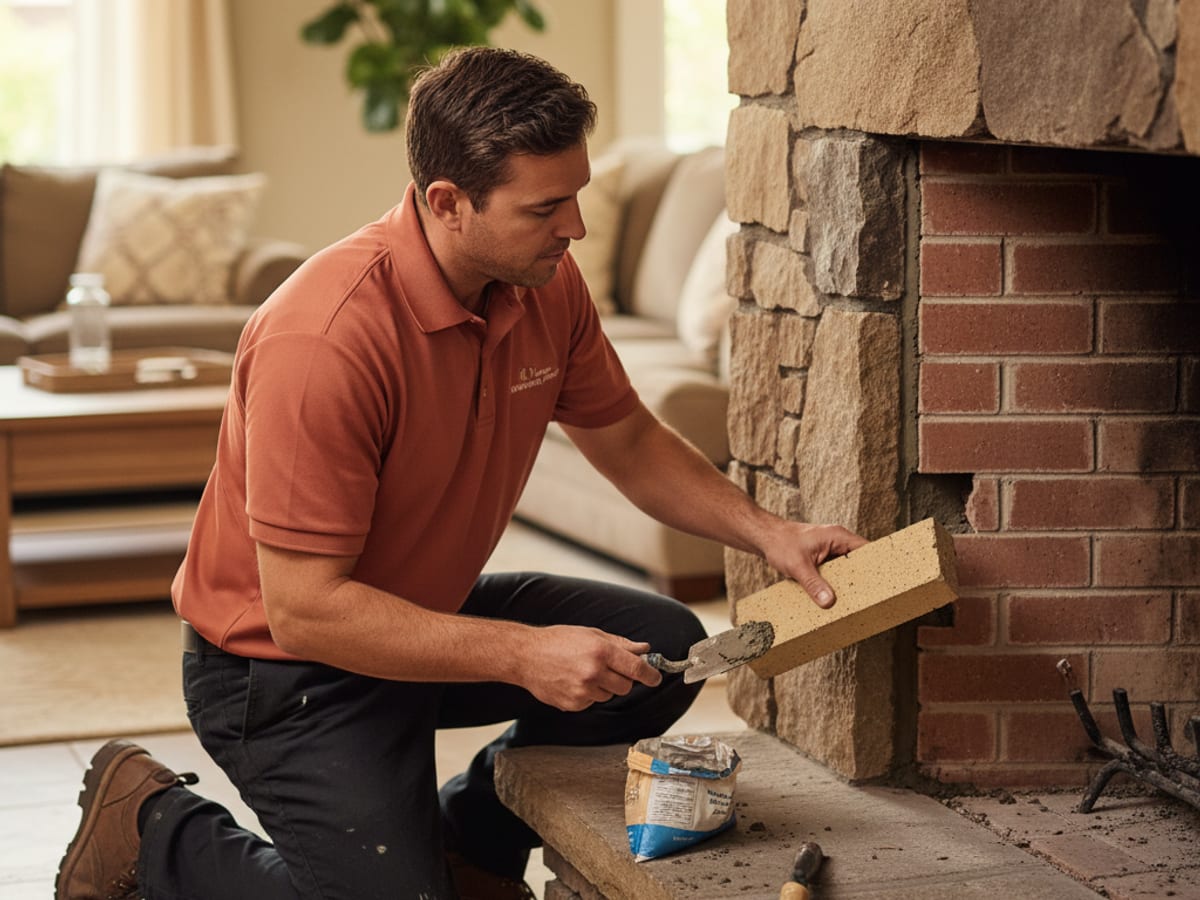
Fireplace repair in San Diego usually runs $150 to $1,100 for component work, and $400 to $2,500 when the firebox or refractory is the problem. Most repairs here aren’t from heavy use. They’re from coastal moisture, long idle stretches, and gas systems that sit unused for months. Below is what each repair costs, the problems we actually see in San Diego County, and how to tell which fix you need.
San Diego fireplaces fail differently
National cost guides assume you burn fires all winter. Most of the county doesn’t. We have mild winters, marine-layer humidity, and a lot of gas fireplaces that get lit a handful of times a year.
That changes what breaks. Low use doesn’t protect a fireplace. It hides problems. A unit that sits idle for ten months still corrodes, still takes on coastal moisture, and still collects debris. Then you light it in December and find out something failed quietly back in spring.
Three patterns drive most of our repair calls:
Coastal moisture. Salt air near the coast (Encinitas, Carlsbad, Coronado, Point Loma) corrodes gas valves, igniters, and metal firebox components faster than inland air does. It also soaks into masonry and refractory panels through cracked crowns and worn caps.
Low-use deterioration. Idle gas fireplaces develop stuck valves, oxidized thermocouples, and spider nests in the burner orifice. Spider webs in the gas line are a genuine and common no-light cause here.
Rare-rain leaks. When it finally rains hard, water finds every gap at once. Most “my fireplace smells musty” and “there’s a stain on the wall” calls land in the days right after a storm.
Gas fireplace repair: $85 to $1,000
Gas fireplaces are common across coastal San Diego, and they’re what we get called about most. The good news is that the failures are usually small parts, not the whole unit.
Here’s what the common gas repairs run in 2026, with national averages for context. Our coastal corrosion work tends to sit at the upper end because parts are often more oxidized than in dry climates.
| Repair | Typical cost | What it fixes |
|---|---|---|
| Igniter replacement | $85–$200 | Won’t spark or light |
| Thermocouple / thermopile | $75–$350 | Pilot won’t stay lit |
| Gas valve replacement | $150–$350 | No gas flow, safety shutoff |
| Burner cleaning + orifice clear | $120–$250 | Weak flame, spider nests, soot |
| Blower motor | $250–$1,000 | No heat circulation, noise |
A pilot that won’t stay lit is almost always a corroded thermocouple, and near the coast that’s a yearly conversation. A unit that clicks but won’t light is usually the igniter or a clogged orifice. Neither one means you need a new fireplace.
One safety note specific to gas: if you smell gas, or the glass front is fogging with a yellow flame, stop using it and get it inspected. Yellow flame and soot on the glass point to incomplete combustion, which can produce carbon monoxide.
Firebox and refractory repair: $200 to $2,500
The firebox is where the fire actually burns. In a masonry fireplace it’s firebrick. In a prefab (factory-built) unit it’s refractory panels, which look like concrete tiles.
Cracks here matter because the firebox is your barrier against the framing behind it. Hairline cracks from heat cycling are normal. Cracks you can fit a coin into are not.
Refractory panel replacement runs $200 to $300 per panel installed. Coastal homes need this more often than the climate would suggest, because moisture wicks into the panels during idle months and then steam-cracks them on the first hot fire.
Firebrick and mortar repair in a masonry firebox runs $200 to $900 depending on how many bricks and how deep the joint failure goes.
Full firebox replacement runs $455 on average and up to $2,500 for a complete rebuild. This is rare in San Diego unless a unit was neglected for years or took water damage from a long-failed crown.
Don’t let anyone sell you a full firebox rebuild for cracks that only need a few panels or some refractory mortar. Ask for photos of the actual damage first.
Damper, smoke chamber, and draft repair: $150 to $1,200
San Diego’s mild air and frequent marine layer make draft problems more common than you’d expect. A cold, damp flue doesn’t pull smoke up well, so you get smoke spilling into the room.
Damper repair or replacement runs $150 to $500. A rusted-shut or warped damper is a coastal classic. A top-mount damper, which seals at the top of the flue, runs higher but also stops the moisture and animals that cause the rust in the first place.
Smoke chamber parging (smoothing the rough area above the firebox) runs $300 to $900 and fixes a lot of smoking-fireplace complaints. We cover the why behind smoke problems in why your fireplace smokes.
If your fireplace only smokes on certain days, that’s often the marine layer creating a cold air plug in the flue, not a broken fireplace. A simple pre-fire flue warm-up fixes it.
Water-damage repair: $400 to $4,000
This is the San Diego repair people don’t see coming. Months of dry weather, then one atmospheric river dumps inches in a day, and every weak point leaks at once.
Water gets in through a cracked crown, a missing or rusted cap, or failed flashing where the chimney meets the roof. From there it ruins firebrick, rusts the damper and firebox steel, stains interior walls, and rots the mortar from the inside.
Repairs depend on the source:
- Cap replacement: $225–$750
- Crown seal or rebuild: $400–$2,400
- Flashing repair: $300–$1,200
- Interior masonry and firebox repair from water damage: $500–$4,000
The cheapest fix is the one you make before the rain. If you haven’t had the chimney looked at since the last big storm, that’s the time to do it. We break down which leak is which in chimney flashing leak vs. crown leak.
Wildfire ember protection isn’t optional here
San Diego County sits in real fire country. A chimney without a proper spark arrestor sends embers onto your own roof and your neighbors’, and it lets windblown embers drop into the flue during a fire event.
California code requires a spark arrestor with mesh no larger than 1/2 inch on wood-burning chimneys. A lot of older San Diego homes either never had one or have a rusted-out cap that no longer screens anything.
Adding or replacing a spark-arrestor cap runs $225 to $750. It’s cheap insurance in a county where ember-driven ignition is a genuine risk during Santa Ana season.
How to know which repair you need
Quick gut check before you call anyone:
| Symptom | Likely repair | Rough cost |
|---|---|---|
| Pilot won’t stay lit | Thermocouple | $75–$350 |
| Clicks but won’t light | Igniter or orifice | $85–$250 |
| Smoke spills into room | Damper, draft, or smoke chamber | $150–$1,200 |
| Cracks in firebox panels | Refractory replacement | $200–$300/panel |
| Stain on wall or musty smell | Water intrusion (cap, crown, flashing) | $225–$4,000 |
| No spark screen on top | Spark-arrestor cap | $225–$750 |
The honest version: most fireplace repair in San Diego is a few hundred dollars, not a few thousand. The big numbers only show up when a small leak got ignored long enough to wreck the masonry behind it.
Questions worth asking any fireplace repair company
You don’t need to know chimney work to hire well. You need a few questions.
- Will you show me photos of the actual damage? A real repair company documents what’s broken before quoting a fix.
- Is the quote itemized and in writing? Vague “fireplace repair” line items hide upsells.
- Do you follow NFPA 211 inspection standards? Industry groups like the CSIA teach a Level 1, 2, and 3 inspection scale. Ask the company how they inspect, and ask whether they’re certified to those standards. (We explain those levels in CSIA inspection levels explained.)
- Will you fix the cause, not just the symptom? Replacing a rusted damper without addressing the leak that rusted it means you’re back next year.
FAQ
How much does fireplace repair cost in San Diego? Most repairs run $150 to $1,100 for parts and labor on gas components and dampers. Firebox or refractory work runs $200 to $2,500, and water-damage repairs can reach $4,000 if a leak went unaddressed for years.
Why won’t my gas fireplace light after sitting all summer? Almost always a corroded thermocouple, a clogged burner orifice, or a spider nest in the gas line. All three are common on low-use coastal fireplaces and are inexpensive to fix.
My fireplace only smokes on foggy days. Is it broken? Probably not. San Diego’s marine layer creates a cold, damp plug in the flue that blocks draft. Warming the flue before lighting usually solves it. Persistent smoking points to a damper, smoke chamber, or sizing issue.
Do I need fireplace repair if I barely use it? Often yes. Idle fireplaces still corrode, take on coastal moisture, and collect debris. Low use hides deterioration rather than preventing it, so problems surface the first time you light a fire.
How do I know if my firebox cracks are serious? Hairline cracks from heat are normal. Cracks wide enough to fit a coin, gaps that expose the material behind the panel, or crumbling refractory all need repair before the next fire.
Is a spark arrestor required in San Diego? Yes. California requires a spark-arrestor cap with mesh no larger than 1/2 inch on wood-burning chimneys. In a county with regular wildfire risk, it’s one of the most important parts on your chimney.
Get a straight answer on your fireplace
We give upfront written quotes, cover all of San Diego County, and know the coastal and low-use problems that generic repair shops miss. If your fireplace won’t light, smokes, leaks, or just hasn’t been looked at in years, we’ll tell you exactly what it needs and what it costs, with photos.
Call us at (858) 925-5546 for a free quote. You can also read more on our fireplace repair service page.