A complete wood stove installation in San Diego typically runs $3,800–$9,500 in 2026, depending on whether you’re installing a freestanding stove or a fireplace insert, how much chimney system work the installation requires, and your local permit jurisdiction.
Here’s a line-by-line breakdown of every cost component so you know what you’re actually paying for.
TL;DR
Wood stove installation cost in San Diego: $3,800–$9,500 complete.
- Freestanding stove with full new Class A chimney through the roof: $5,500–$9,500
- Fireplace insert with insulated stainless liner: $4,200–$7,000
- Stove unit alone (before installation): $1,200–$4,500+ depending on brand and output
- San Diego County permits add $250–$600 to most jobs
- EPA 2020-certified stoves are required for any new installation in California
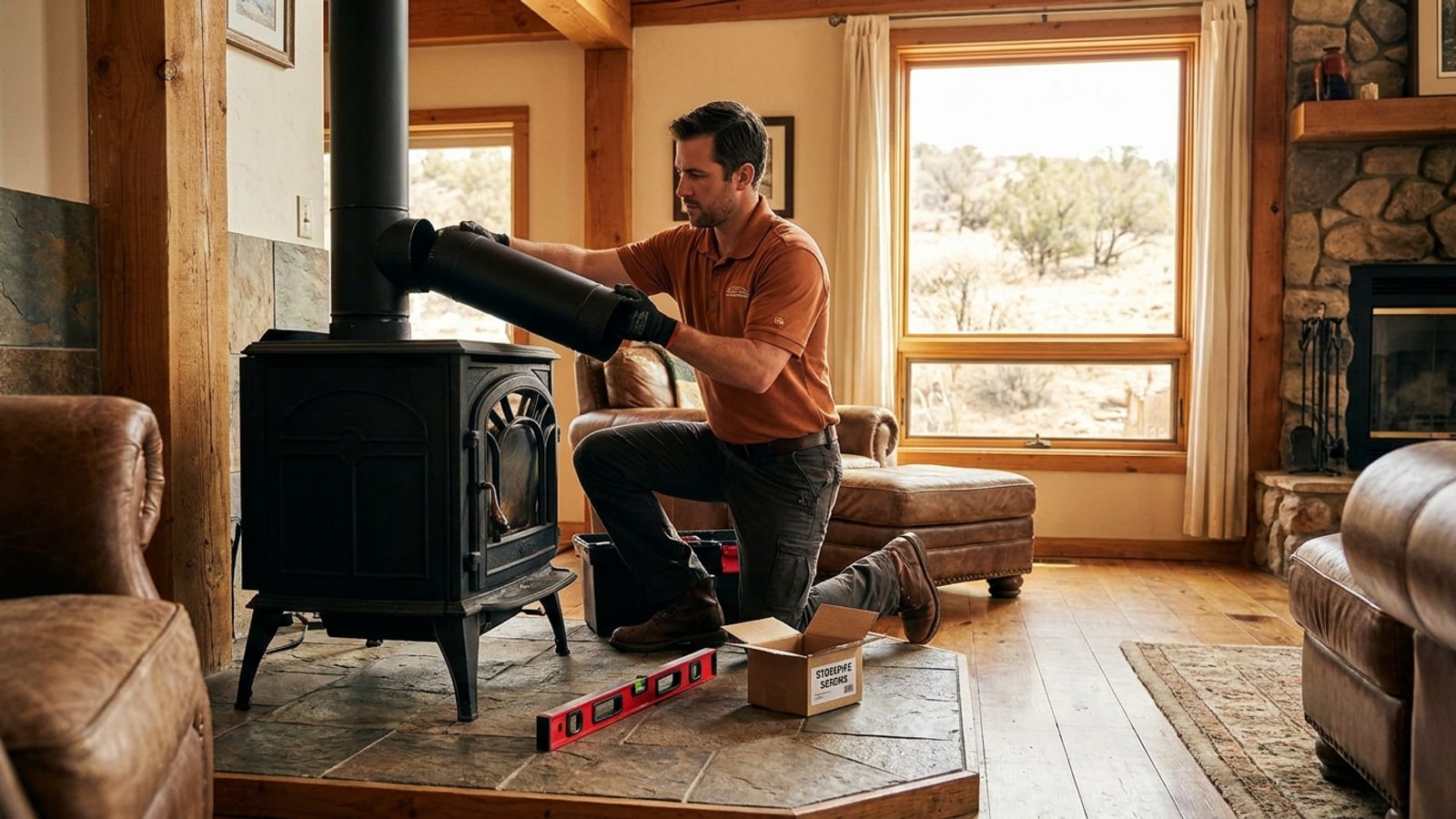
How much does wood stove installation cost in San Diego?
Total installed cost for a freestanding wood stove with a new Class A through-the-roof chimney system runs $5,500–$9,500 in San Diego County in 2026. That includes the stove unit, hearth pad, connector pipe, Class A chimney sections, roof penetration, and labor. Permit and inspection are on top of that.
A fireplace insert (a sealed stove box fitted into an existing masonry opening) costs less because it reuses the existing chimney structure. Total install including the required insulated stainless liner: $4,200–$7,000.
Here’s why the ranges are wide: chimney height, roof pitch, attic conditions, and whether you need a new hearth pad or just clearance work all move the number. The breakdown below shows what each component costs separately.
What does the stove unit itself cost?
The stove is usually the largest single line item, but it’s not the whole bill.
Entry-level EPA 2020-certified stoves (2,000–3,000 Btu/hr category, smaller rooms): $1,200–$2,000 unit cost.
Mid-range EPA 2020-certified stoves (adequate for 1,200–1,800 sq ft): $2,000–$3,200 unit cost. This is where most San Diego backcountry and East County installs land.
Premium catalytic stoves (Blaze King, Woodstock Soapstone, Hearthstone, higher sustained efficiency): $3,200–$4,500+ unit cost. Worth considering for homes in Julian or Alpine that run the stove as primary heat through December and January.
One thing that affects cost in California specifically: every new wood stove sold and installed in the state must meet EPA 2020 Phase 3 emission standards. That requirement filters out the cheapest stove options from other markets, so California-legal units trend toward the mid-range floor. Installers in our San Diego network only quote EPA 2020-certified units.
What does the hearth pad and clearance work cost?
A wood stove requires non-combustible clearances on all sides and a non-combustible hearth pad underneath. California Building Code and NFPA 211 both specify minimum distances from combustibles (varies by stove model based on the listed clearances in the manufacturer’s documentation).
Prefabricated hearth pad (tile over cement board, typical new install): $400–$900 installed. Size and tile selection drive the range.
Masonry hearth extension (adding to an existing hearth that doesn’t meet size requirements): $600–$1,400 depending on size and finish.
If you’re installing into an existing masonry fireplace as an insert, the existing hearth usually meets clearance requirements for the insert footprint. Clearance work is more often needed on freestanding stove installations where the stove sits on an open floor.
What does the chimney connector and flue system cost?
The flue system is where wood stove installation cost can vary most, because it depends entirely on your existing chimney situation.
Fireplace insert with stainless liner
If you’re installing a wood stove insert into an existing masonry fireplace, you need a stainless steel liner run from the stove collar up to the cap at the top of the chimney. Per the wood-stove-vs-fireplace comparison we’ve covered before (see wood stove vs. fireplace), this liner is non-negotiable and required by code for any insert installation.
Insulated stainless liner, standard 25-foot run: $1,200–$2,400 installed. Includes top cap, insulation wrap around the liner, and connection to the stove collar. Rigid liner is more common in shorter straight runs; flexible liner is used when the flue has offsets.
For longer chimney runs or larger-diameter flue requirements, liner cost increases. See chimney liner installation cost San Diego for a full breakdown of liner-only pricing.
New Class A chimney for a freestanding stove
If you’re installing a freestanding stove in a room with no existing chimney, you need a complete factory-built Class A chimney system. This is the largest variable in wood stove installation cost.
Class A insulated chimney sections (the double-wall or triple-wall metal chimney): $600–$1,800 in materials depending on height. Typically sold in 36-inch sections.
Chimney connector pipe (the single-wall or double-wall pipe from the stove collar to the first Class A section): $200–$450.
Through-the-roof penetration kit with flashing and weather cap: $400–$900 installed. Roof pitch and roofing material (tile vs. composition) affect this. Tile roof penetrations take longer and cost more.
Through-the-wall penetration (some installations exit through an exterior wall instead of the roof, then the Class A chimney runs up the outside of the structure): $800–$1,600 installed. Common in garage conversions and some additions. Structurally simpler than a roof penetration but requires exterior chimney support brackets.
Labor to install a complete new Class A chimney system typically runs $1,200–$2,500 depending on complexity, height, and access.
What do San Diego permits and inspection cost?
California requires permits for wood stove installations in most jurisdictions. This isn’t optional, and it matters: a stove installed without permits can complicate home insurance claims and home sales.
San Diego County unincorporated areas: permit runs approximately $250–$450 for a standard residential wood-burning appliance installation.
City of San Diego, Escondido, Ramona area (unincorporated): similar range, $300–$600 depending on scope and plan review.
Permit includes a rough inspection (before final connections) and a final inspection. The inspectors check clearances, connector installation, and chimney penetration flashing. Reputable installers in our San Diego network pull permits as a standard part of the job, not an add-on.
How does freestanding stove vs. insert cost compare?
Side by side for a typical mid-range installation:
Fireplace insert, mid-range EPA stove + liner + permit:
- Stove unit: $2,200–$3,200
- Insulated stainless liner (25 ft): $1,200–$2,000
- Hearth work (if needed): $400–$800
- Labor: $800–$1,200
- Permit: $300–$500
- Total: $4,900–$7,700
Freestanding stove, new Class A chimney system + permit:
- Stove unit: $2,200–$3,200
- Class A chimney sections + connector: $900–$2,200
- Roof penetration + flashing: $400–$900
- Hearth pad: $500–$900
- Labor: $1,200–$2,200
- Permit: $300–$600
- Total: $5,500–$10,000
The insert is generally the lower-cost option when you have a usable existing masonry fireplace and chimney. The freestanding install costs more because you’re building a complete chimney system from scratch.
What makes wood stove installation cost higher in San Diego’s backcountry?
Homes in Julian, Alpine, and similar East County communities often have steeper rooflines, longer flue runs (vaulted ceilings mean taller Class A chimney sections), and tile roofs that require more time at the penetration. Access to the roof on steeper-grade lots also adds time.
That said, these are exactly the homes where wood stoves make the most financial sense. December and January night temperatures in Julian regularly drop below 30°F, and many of these properties are on propane. A properly sized catalytic stove can meaningfully offset propane costs, and payback math typically looks good over a 5–8 year window.
The installations in our network that serve backcountry communities price for the complexity, but the installs are common enough that the crew handles them routinely.
Frequently asked questions
Does California require EPA-certified wood stoves? Yes. California law requires any new wood stove or insert installed in the state to meet EPA 2020 Phase 3 emission standards. The California Air Resources Board enforces this. Every stove quoted through our San Diego network meets this requirement. You’ll need to verify the stove model’s certification before purchase; your installer should be able to confirm it.
Do I need a permit to install a wood stove in San Diego County? In almost all cases, yes. San Diego County and its incorporated cities treat wood stove and insert installations as building permits, which require plan submittal, inspection at rough, and final sign-off. The permit cost is generally $250–$600 and should be factored into your installation budget. Installers who tell you permits aren’t required are worth being skeptical of.
How long does a wood stove installation take? A straightforward fireplace insert with liner typically takes one day for an experienced crew. A freestanding stove with a new Class A through-the-roof chimney system runs one to two days depending on height, roof pitch, and attic conditions. Permit turnaround in San Diego County is typically 2–3 weeks for residential appliance installs, though some jurisdictions offer over-the-counter review for standard configurations.
Can I install a wood stove myself in San Diego? Technically a homeowner-builder can pull a permit and do their own installation in California, but manufacturer warranties on the stove and chimney components typically require professional installation by a qualified installer. More practically: roof penetrations, Class A chimney section connections, and stove clearance verification are jobs where errors have real consequences. The installers in our San Diego network are licensed contractors (verify your installer’s license at the California State License Board) and carry liability insurance that protects you if something goes wrong during or after installation.
What to ask before booking an installation
A few things worth verifying before signing a contract:
- Is the stove EPA 2020 Phase 3 certified? Ask for the model’s certification documentation.
- Will you pull the permit, or do I need to do that myself?
- Is the liner stainless steel and insulated, or uninsulated? (Insulated is required for any solid-fuel insert and strongly recommended for any stove liner.)
- Does your estimate include the hearth pad, or is that extra?
- What warranty do you offer on the installation labor?
Itemized estimates make this easy. If a quote arrives as a single lump sum without line items, ask for the breakdown. It’s the only way to compare quotes meaningfully.
Ready to get a quote for your installation? Call us at (858) 925-5546 for a same-day estimate.