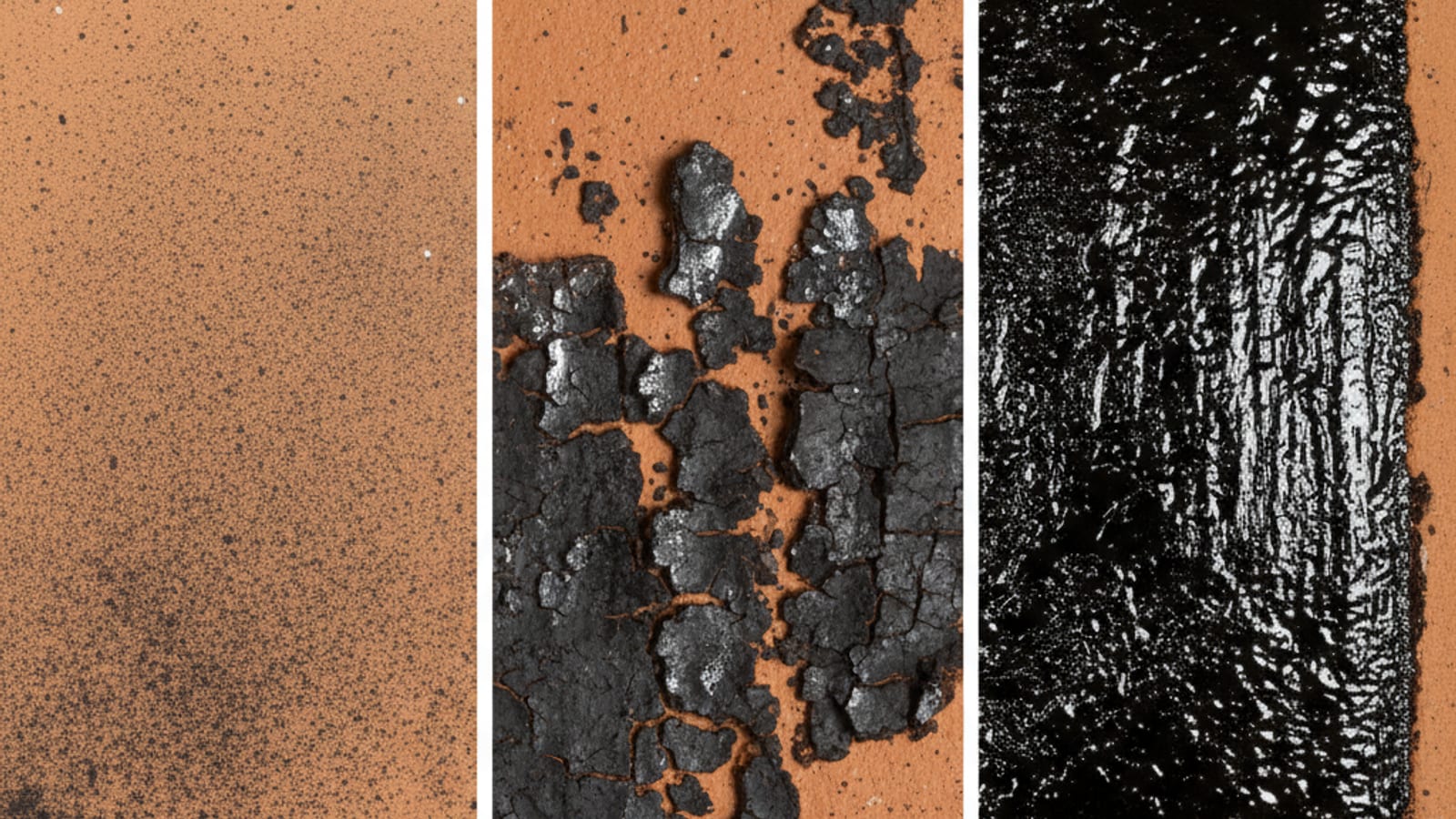
Creosote is the tar-like residue from incomplete wood combustion. It comes in three stages, and the difference between them is the difference between a $189 sweep and a chimney fire. Here’s what each stage looks like, what causes it, and what it takes to remove.
What creosote is and how it forms
When wood burns, two things happen: full combustion (clean burn, mostly CO₂ and water vapor) and incomplete combustion (releases unburned wood gas). The unburned gas rises into the flue. If the flue is hot enough, the gas keeps rising and exits the chimney. If the flue is cool, the gas condenses on the flue walls and deposits as creosote.
Two things make creosote worse: cool flue temperatures and excess unburned wood gas. Both come from the same root cause, fires that smolder instead of burn hot.
The biggest creosote-makers:
- Wet, green, or unseasoned wood (the moisture cools the fire)
- Soft wood (pine, fir, eucalyptus, burns hot and fast but produces more wood gas)
- Damper closed too far (starves the fire of air, drops temperature)
- Wood stove insert with bypass damper closed on reload (cools the cat-stove flue dramatically)
- Long shoulder-season fires meant for ambiance, not heat (small fires that smolder)
The flip side: hot fires of fully seasoned hardwood produce almost no creosote. A clean-burning system with the right wood and proper draft barely needs annual sweep service.
Stage 1: sooty, brushable
Stage 1 creosote looks like dry, black, flaky soot. You can brush it out with a normal chimney brush. It’s the result of mostly-clean burning with minor incomplete combustion, and it’s what you’ll find in a well-maintained chimney burning seasoned hardwood.
What it looks like:
- Black, dusty texture
- Loose flakes that fall when the flue is brushed
- Easily brushable with a poly or wire brush
- Fine particles that the HEPA vacuum picks up cleanly
What removes it:
- Standard chimney sweep with poly or wire brush. Included in our $189 sweep service. No extra cost.
When to expect it:
- Most well-maintained chimneys with annual or biennial sweep cadence
- Homes burning seasoned hardwood with hot fires
- Light-use fireplaces (5–15 fires a year)
Stage 1 isn’t dangerous, it’s normal. Annual sweep keeps it managed.
Stage 2: crusty, requires rotary chains
Stage 2 creosote looks like crusty, layered dark deposits, somewhere between Stage 1 powder and Stage 3 glaze. It chips off in chunks if you try to scrape it but won’t brush off easily. It’s the result of consistent low-temperature burning, often from wood stove inserts run with closed dampers or fireplaces that get smoldering shoulder-season fires.
What it looks like:
- Crusty, dark deposits with some sheen
- Layered texture, you can see distinct deposit layers
- Won’t brush out with normal sweep equipment
- Chips off in chunks under a scraper
What removes it:
- Rotary nylon chain on a drill, pulled up the flue, chips the buildup off the tile while a HEPA vacuum collects the debris
- Adds $200–$400 to a standard sweep depending on flue length and severity
- Sometimes a single visit handles it; heavy buildup may need a second pass
When to expect it:
- Wood stove inserts that haven’t been serviced in 2+ seasons
- Fireplaces that burn primarily for ambiance with small low-air fires
- Homes burning soft wood (pine, eucalyptus) without seasoning
- Heavy users (East County, Backcountry) that skip an annual sweep
Stage 2 is a warning sign. It means burning conditions are producing more creosote than normal, and ignoring it builds toward Stage 3.
Stage 3: glazed, fire hazard, hardest to remove
Stage 3 creosote is the one that burns down houses. It looks like glassy black glaze fused to the flue tile, like someone painted the inside of the flue with shiny black tar. It won’t chip off, won’t brush off, and has the highest energy density of any creosote form.
What it looks like:
- Glassy, reflective black coating
- Looks “wet” or freshly painted
- Fused to the flue tile (not sitting on top of it)
- Won’t move with brush or rotary nylon chain
What causes it:
- Multiple seasons of Stage 2 buildup that was never removed
- Sustained low-temperature burning of green or soft wood
- Wood stove inserts with chronically closed bypass dampers
- Fireplace inserts with undersized flues that condense the wood gas
Why it’s dangerous:
- Stage 3 is concentrated, flammable carbon
- When it ignites, usually from a hot fire or chimney fire spark, it can burn at 2,000°F or higher
- The flue tile cracks from the thermal shock
- Cracked tile lets the fire reach the framing around the chimney
- The CSIA estimates 25,000+ chimney fires per year in the US, most caused by Stage 3 buildup
What removes it:
- Rotary carbide chain for direct mechanical removal
- PCR (Poultice Creosote Remover) chemical treatment, a paste pulled up the flue with a foam plug, left in place 24–72 hours to chemically break down the glaze, then brushed and vacuumed out
- Often two visits required, initial chemical application, then second visit for removal
- Pricing starts at $750 and scales with flue length and severity
- Mandatory camera scan after removal to verify the flue is clear and to inspect for hidden damage from the buildup
Why this matters: Stage 3 creosote often hides damage. Cracked flue tiles, missing mortar joints, damaged liner sections, all common under heavy Stage 3 buildup. We don’t sign off on a flue until we’ve camera-scanned what’s underneath.
Why creosote sweeping logs aren’t a substitute
Creosote Sweeping Logs (CSL) and chemical powder treatments work on Stage 1 and light Stage 2. They change the chemistry of the deposit so it brushes out easier. They do nothing on Stage 3 glazed creosote.
Worse, and this is the real problem, some homeowners use them instead of an inspection. They burn a CSL once a year, assume the chimney is fine, and miss the cracked liner the buildup is hiding. The CSL is a supplement to professional inspection, not a substitute for it.
How to prevent each stage
Stage 1 management:
- Burn fully seasoned hardwood (oak, almond, eucalyptus that’s been split and stacked 12+ months)
- Annual or biennial sweep service
- Hot fires, not smoldering ones
Stage 2 prevention:
- Fully open damper for the first 30 minutes of any fire to warm the flue
- Avoid soft wood, wet wood, or wood under 20% moisture content
- For wood stove inserts: open the bypass damper on every reload
- Annual sweep, not biennial
Stage 3 prevention:
- Address Stage 2 the season it appears, don’t let it build
- Annual full inspection, not just sweep
- If your stove insert chronically blackens its glass, the burn pattern is making creosote, talk to a sweep about flue sizing
Bottom line
- Stage 1 (sooty): included with standard $189 sweep. Not dangerous. Normal.
- Stage 2 (crusty): rotary nylon chain, +$200–$400. Warning sign, change burning habits.
- Stage 3 (glazed): rotary carbide chain + PCR chemical, starts at $750. Fire hazard. Stop using the fireplace until removed.
If you have any doubt about what stage you have, schedule an inspection. The $89 inspection fee is credited toward any cleaning that follows, and it’s a fraction of what a chimney fire costs.
Call us at (858) 925-5546.