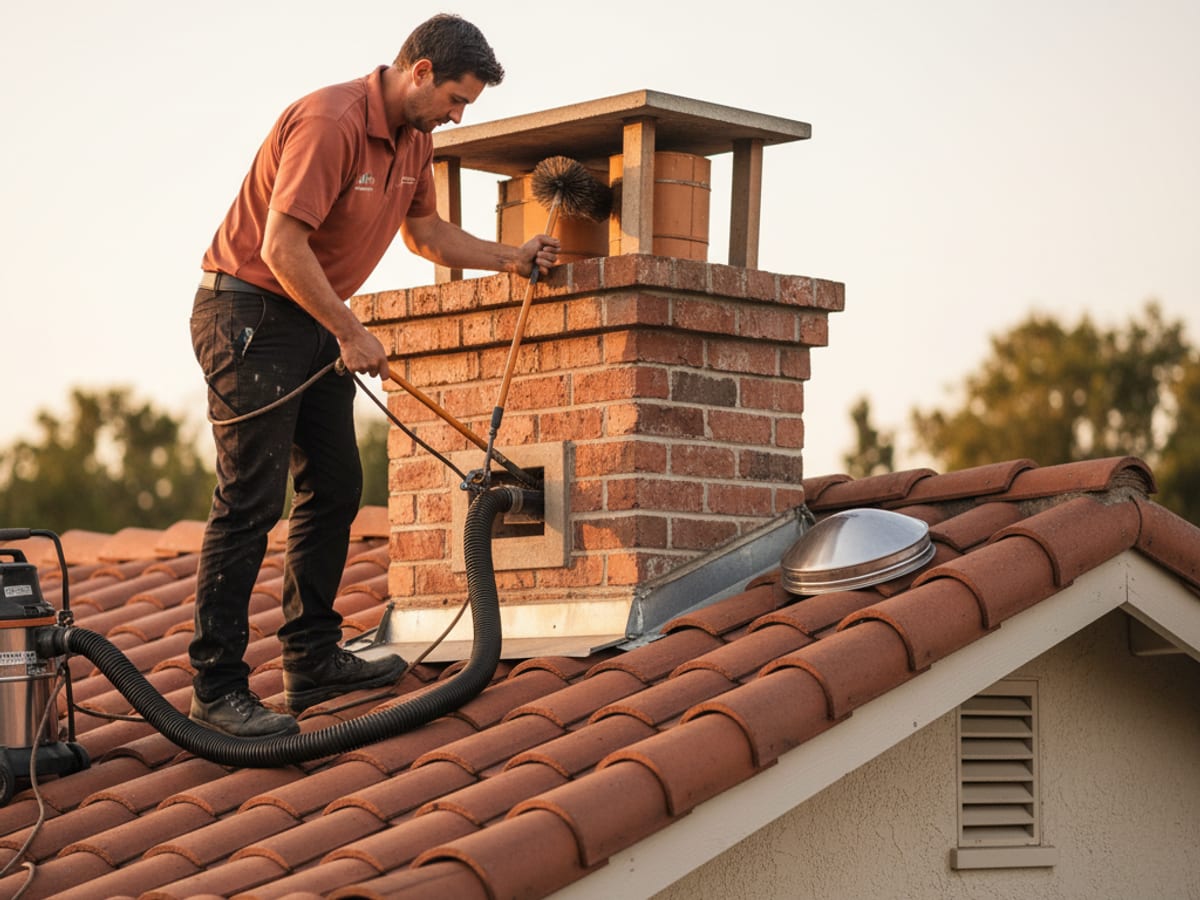
The best chimney sweep in San Diego is the one who shows up with a camera, gives you the price in writing before any work starts, and knows that a coastal fireplace ages differently than one in Denver. Star ratings help, but they don’t tell the whole story. Here’s how to vet a sweep on the things that actually matter, plus a scoring checklist you can use on any company you call.
Why “best” looks different in San Diego
Most chimney-sweep advice online is written for cold climates where fireplaces run all winter. That advice doesn’t fit here.
San Diego fireplaces get used a handful of nights a year. Light, occasional burning means creosote builds slowly, so the bigger risks are the ones tied to our climate, not heavy soot. A good local sweep understands all of this:
- Low use, light creosote. Many homes here have Stage 1 sooty buildup, not the glazed Stage 3 that drives chimney fires up north. A sweep who tries to upsell heavy creosote removal on a rarely-used flue is guessing or padding the bill.
- Coastal moisture. Salt air and damp winters attack masonry. Crown cracks, spalling brick, and rusted dampers show up faster within a few miles of the coast than they do inland.
- Marine layer and rare-rain leaks. Chimneys here can sit dry for months, then leak the first real storm. That timing makes water damage easy to miss until it’s structural.
- Gas fireplaces everywhere. A huge share of San Diego homes burn gas logs, not wood. Gas units still need flue and venting checks, and the inspection is different from a wood-burning fireplace.
- Wildfire embers. In the foothills and canyon-edge neighborhoods, a working spark arrestor on the cap isn’t optional. A sweep should check it as a fire-safety item, not an afterthought.
If the company you’re talking to can’t speak to any of this, they’re running a generic playbook. The best local sweep treats your fireplace like a San Diego fireplace.
The one credential to ask about: CSIA
The Chimney Safety Institute of America (CSIA) runs the main certification for chimney professionals in the U.S. A CSIA-Certified Chimney Sweep has passed an exam on fire codes, venting, and inspection standards, and has to recertify to keep it.
This is the single most useful thing to ask about when you call. Two ways to check it:
- Ask directly. “Is the technician who’ll do my inspection CSIA-certified? What’s the certification number?” A real credential comes with a number you can look up.
- Use the CSIA directory. CSIA runs a free “Find a Certified Pro” search at csia.org. Punch in your zip code and it lists certified pros near you. Use it to confirm what a company tells you on the phone.
CSIA certification isn’t a legal requirement to sweep a chimney in California, which is exactly why it’s worth asking about. It separates the trained pros from anyone with a brush and a truck. Don’t take a website badge at face value. Ask for the number, then verify it.
Reviews: what to read past the star rating
A 4.9 on Yelp or Google is a starting point, not the answer. Review counts and recency matter more than the headline number. Here’s how to read them like a pro.
- Volume over score. A 4.7 with 300 reviews beats a perfect 5.0 with 6. More reviews means the rating is real, not a handful of friends.
- Read the 3-star reviews first. Five-stars tell you the company can do a good job. Three-stars tell you what happens when something goes sideways, and how they handle it.
- Look for specifics. “They showed me the camera footage and explained the crack” is worth more than “great service.” Specifics are hard to fake.
- Check for upsell complaints. In a low-use market like ours, the recurring red flag is pressure to buy repairs you didn’t need. If three reviewers say the same thing, believe them.
- Watch the dates. A company with great reviews from 2021 and silence since may have changed hands or lost its good techs.
Cross-reference at least two platforms. A company that’s strong on Google, Yelp, and the Better Business Bureau is more trustworthy than one that’s perfect on a single site.
A scoring checklist for any sweep you call
Run every company through the same questions. Give one point for each clear yes. This turns a fuzzy decision into a number you can compare.
| Criteria | What to ask | Why it matters |
|---|---|---|
| Certification | ”Is the tech CSIA-certified, and what’s the number?” | Confirms real training, not just a brush and a truck |
| Written quote upfront | ”Do I get the price in writing before any work?” | Protects you from surprise charges mid-job |
| Camera inspection | ”Do you scan the flue with a camera and show me?” | You see the actual condition, not a verbal summary |
| Written report | ”Do I get a report with photos afterward?” | Documentation you can keep, share, or hand to a buyer |
| SD County coverage | ”Do you regularly work in my city?” | Local crews know coastal and canyon-edge issues |
| Coastal and gas know-how | ”How do you handle gas fireplaces and salt-air masonry?” | Tells you if they run a generic or local playbook |
| Insurance | ”Are you insured for work on my roof and home?” | Covers you if something gets damaged |
| No-pressure repairs | ”If you find issues, do I get options, not an ultimatum?” | The low-use upsell is the most common SD complaint |
A 7 or 8 is a company worth hiring. Anything that stumbles on the written quote, the camera, or the report deserves a second call to a competitor before you book.
Watch for these red flags
A few things should make you hang up and dial the next company.
Won’t quote in writing. “We’ll figure out the price once we’re up there” is how a $189 sweep becomes a $900 surprise.
Heavy upsell on a rarely-used fireplace. If your fireplace burns six nights a year and someone insists on a $750 creosote removal without showing you camera footage, get a second opinion. Read more in our guide to the three stages of creosote so you know what’s actually in your flue.
No camera, no report. A flashlight up the flue and a verbal “looks fine” isn’t an inspection. You want photos and a written summary you can keep.
Vague on inspection level. A real estate sale, a fire, or a fuel change calls for a Level 2 inspection, not a basic check. If a company can’t tell you the difference, see our breakdown of CSIA inspection levels.
Where Draft Pro San Diego fits
We’ll be straight about how we work, so you can score us against the same checklist.
We give you the price in writing before any work starts. The inspection fee is credited toward a cleaning if you move forward, so a quote costs you nothing. We scan every flue with a camera and show you the footage, then email a report with photos. We cover all of San Diego County, from coastal Encinitas and Oceanside down to the inland valleys, and we build the inspection around how your fireplace actually gets used here: light burning, coastal moisture, gas units, and spark-arrestor checks in ember country.
We don’t push repairs you don’t need. If your flue is clean, we’ll tell you and you’ll pay for the inspection, not invented work. When you want to compare real numbers, our chimney sweep cost guide for San Diego lays out what each service runs, and you can book a chimney sweep or a standalone chimney inspection directly.
Frequently asked questions
Is CSIA certification required to sweep a chimney in California? No. California doesn’t require it, which is why asking about it matters. It’s the clearest signal that a technician has real training rather than just equipment.
How do I verify a CSIA certification? Ask for the technician’s certification number, then look the company up in the free “Find a Certified Pro” directory at csia.org. If the company won’t give you a number, treat that as your answer.
Do gas fireplaces in San Diego need a chimney sweep? Yes. Gas logs produce less soot than wood, but the flue, venting, and connections still need an inspection. The checks differ from a wood-burning fireplace, so hire a sweep who handles both.
How often should a low-use San Diego fireplace be swept? It depends on how much you burn, not the calendar alone. Most light-use homes here are fine with an annual inspection and a sweep as needed. We cover the full reasoning in how often you should sweep a chimney.
Why does coastal location change who I should hire? Salt air speeds up crown cracking, brick spalling, and damper rust. A sweep who works the coast regularly knows to check these. An inland-only crew may miss moisture damage that’s common within a few miles of the water.
What’s the most common complaint about chimney sweeps in San Diego? Upselling. Because fireplaces here get light use, some companies push heavy creosote removal that the flue doesn’t need. Insist on camera footage before agreeing to any creosote work.
The bottom line
The best chimney sweep in San Diego isn’t the one with the flashiest ad. It’s the one who certifies their work, quotes in writing, shows you the camera, and understands that a coastal, low-use fireplace has its own set of risks. Score every company on the same criteria and the right choice gets obvious.
Want a written quote with no pressure and a camera scan you’ll actually see? Call us at (858) 925-5546. The inspection is credited to any cleaning that follows.